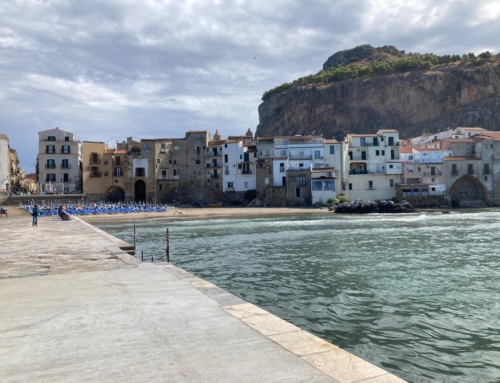


Castelsardo Sardinia
So you are thinking about a trip to Italy and you plan on visiting a few destinations.
Do you need to rent a car?
Here are the three main reasons why you should consider renting a car when visiting Italy…
- You want to visit small towns away from the major cities
- You are traveling with a lot of luggage
- You are traveling with children
While traveling in Italy for the most part is easy to do by train, the trains won’t take you to many of the small towns that you may want to visit outside of the cities.
For instance, if you want to visit the small towns and wineries in the Chianti region of Tuscany, you will definitely need a car.
In general, the regions to the south and east of Tuscany are not as well served by the train system.
This is also the case with the islands of Sicily and Sardinia.
Therefore, renting a car is a better option.
If you have a lot of luggage, using the trains can be a real hassle.
While the high-speed trains are nice and comfortable, the regional trains that operate between the smaller cities can be crowded, and you may not have assigned seats.
And, if you are riding a regional train at rush hour, good luck!
Lastly, if you are traveling with children, those crowded trains can be quite problematic, especially if the ride is going to be an hour or more.
When NOT to rent a car
There are also plenty of reasons why you may not want to rent a car in Italy.
If you are mainly traveling between major cities such as the classic Italian journey of Venice to Florence to Rome, you don’t need a car.

No car needed in Florence
The rail system works perfectly well between these major cities.
You also have easy access by train to other cities such as Milan, Bologna, Naples, and the Northern Lake region.
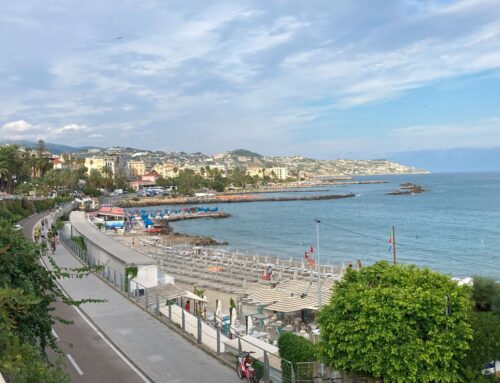
If you are vacationing along the Italian Riviera, you can also rely on the trains.
One of the major cons of renting a car in Italy is that gas is expensive, and there are many toll roads.
So, if you are trying to keep your costs down, you may want to stick with public transportation.
Also, when you DO travel to the small towns, there are often zones within the towns where cars are not allowed.
Therefore, you will need to pay attention to the signs so you don’t get fined.
Parking can be an issue in these small towns as well.
You will need to plan your trip ahead of time so you know exactly where to park when you reach your destination.
Lastly, you definitely don’t want to find yourself driving through major cities, as they can be difficult to navigate.
When you combine heavy traffic and a labyrinth of small streets in historic areas, you can just imagine how easy it is to get lost.
Here are the areas and regions where you will definitely need a car
- Sicily
- Sardinia
- Tuscany – outside of Florence
- Umbria/Abruzzo/Le Marche
- Puglia/Basilicata/Calabria
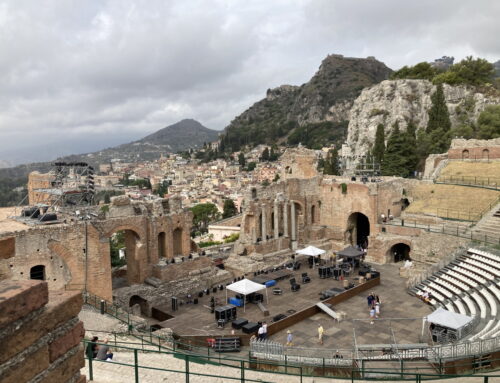
Sicily is the largest island in the Mediterranean, but the rail system primarily serves the north and east coasts.
Therefore, if you want to visit some of the interior towns, it is best to rent a car.

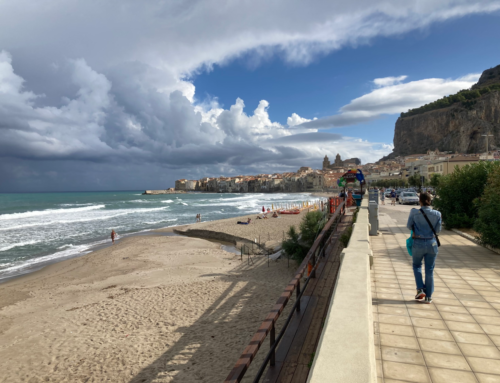
San Vito Lo Capo Sicily
Sardinia is the second largest island in the Mediterranean and the rail system is even more antiquated than in Sicily.
Unless you just intend to spend your time at one location, you’ll want to rent a car.
There are some instances when traveling about Tuscany that you will not need a car. This is the case when heading to Siena, Arezzo, Lucca, or Pisa.
The Cinque Terre in Liguria is also accessible by train from Florence, and it is not recommended you drive to those towns due to their small size and lack of parking.
Otherwise, you definitely want to rent a car when driving through Tuscany and Umbria, both notable for their wines and olive oil.
Abruzzo and Le Marche are regions in central Italy where it may be best to rent a car, depending upon your itinerary.
While there is decent train service along the Adriatic coast, many of the small towns inland are not accessible by train.
Puglia, Basilicata and Calabria are the regions that form the boot of Italy.
Rail service is simply not adequate for getting around those areas, so you will definitely want to get a car to explore.
While train rail service is not adequate for touring the Amalfi Coast, renting a car there is also problematic and best avoided.
The ferries will get from Sorrento to Amalfi and Positano. You can also hire transportation to visit those towns or use the bus system.
How to rent a car in Italy
Renting a car in Italy is actually quite easy.
First of all, you will need your driver’s license in order to rent a car in Italy.
Additionally, you will need an International Drivers Permit if you are not a resident in Europe.
To pick up your International Drivers Permit, head on over to your local AAA office here in the U.S. or equivalent in your country.
Your investment will be about $20.
When you are ready to pick up your car rental, you’ll need your passport as well.
When you rent a car in Italy, the rental rate automatically includes a Collision Damage Waiver insurance policy.
This is by law, so you don’t have a choice to waive this coverage. This is quite basic and has a high deductible.
If you want better coverage, you can opt to pay extra.
We actually recommend opting for the full coverage offered through most rental services.
This may cost upwards of 30 Euros per day, but it will give you more peace of mind.
When you pick up your car, make sure you inspect it completely and take photos of any scratches and dents on the exterior and any damage on the interior.
Make note of those items to your rental agent before driving the vehicle off the lot.
Also, be sure to check the fuel gauge and pay attention to the fine print in the rental agreement about how much gas you must have in the tank when you return the vehicle.
Like anywhere here in the U.S., you will get gouged if you return the vehicle with less fuel than when you picked it up.
Similar to traveling anywhere else, it is a good idea to schedule your rental ahead of time.
Consider DiscoverCars.com to find the best deals on renting a vehicle virtually anywhere in Italy.
Traveling around Italy with a rental car
For directions when traveling around Italy by car, you’ll typically be fine by using the Google Maps app on your smart phone.
Google Maps will also typically update more often than a GPS that may come with the rental car.
With that said, it may also be a good idea to have some paper maps handy as well.
Here are some basic Italian driving laws…
- Seatbelts are required for all passengers
- You must drive with headlights on outside of urban areas
- You can’t turn right when the light is red
- No texting
The alcohol intoxication limit is 0.05%… probably no more than two glasses of wine for most people, maybe just one for some
Limited traffic zones (ZTL) – these are found in many small towns that have narrow streets.
Be on the lookout for these signs, as there may be cameras installed that will identify your vehicle if you drive into these zones illegally.
Only residents with permits are allowed in these zones unless otherwise indicated.
Speed limits where traffic flows smoothly typically ranges from 50 KM/hour in urban areas up to 130 KM/hour on the Autostrada.
These speed limits will be lower in poor weather.
Speed limit monitoring
Over 2,500 KM of Autostrada are covered by the Safety Tutor.
The Safety Tutor monitors your speed between two points. If your average speed is 5% above the speed limit, you will be fined.
In many other areas, the speed limits are monitored by speed cameras.
Is it safe to drive in Italy?
 Driving in Italy is really not that much different than driving in the U.S.
Some people are simply safer drivers than others.
Similar to the U.S., impatient drivers will tailgate.
Just move over and let them pass if you are in the passing lane.
If you are in the right lane, or there is only one lane, don’t be offended. Stick with the speed limit.
In many areas, the roads are narrow and curvy. If anyone in your vehicle is prone to car sickness, they should be prepared.
In the urban areas, pedestrians are everywhere, so drive with vigilance!
In the rural areas, look out for cyclists… cycling is a huge recreational sport in Italy.
When you combine the winding rural roads with this pasttime, you have the potential for disaster.
Drivers who want to pass you will often flash their lights.
Also, it is illegal to pass on the right in Italy, so stick to the right lane unless passing.
Don’t be a left lane hog as is so often the case here in the U.S.
Toll Roads
In Italy, a telepass device allows you to continue through a toll station without stopping. It will beep as you go through.
Otherwise, you pay with cash or a credit card.
Toll roads often have facilities similar to what you will find in the U.S. to allow for re-fueling and to grab a bite to eat.
Buying gas
 Gas stations offer self serve and full service fueling. While there is self service, this is done through a separate payment machine away from the pump.
To operate it, you note the pump you parked next to, enter your payment (credit, debit or cash), and select the pump number. Then you go fill up.
These machines will not typically give you change, and they may not accept a U.S. credit card. So, keep some smaller Euro bills handy.
Gas stations are typically not open 24/7, but you may still be able to get gas at the pump, depending on the station. Not all gas stations will have this feature.
In general, gas stations are open about 12 hours a day, with a break for lunch.
Gasolio is the equivalent of diesel, while benzina = gasoline (look for the green signage).
Final thoughts
You should now have a good idea of what it’s like driving in Italy, and when you should consider renting a car.
Ultimately, you just need to be sensible when driving around Italy as with anywhere else.
Discover more from Your Journey To Italy
Subscribe to get the latest posts sent to your email.